

We build software products

Scroll to explore

Aakam is a technology holding company. We build, own and operate SaaS products around problems worth solving — each one intelligent enough to read a business, decide what needs to happen, and act on it.

WHY WE BUILD MORE THAN ONE PRODUCT

A
problem
worth
solving
deserves
a
product
built
around
it,
and
the
depth
that
focus
buys.

So each problem gets a dedicated product, with everything a product needs to go deep on it: its own brand, its own market, its own customers and its own pricing.

What they share is Aakam — the people who build them, the engineering that gets reused, and one conviction: that the value a business earns from customers it already has is the value most worth engineering for.

HOW THE PRODUCTS WORK

You
don’t
need
to
know
what
to
do
next.
AI
does.

Aakam builds intelligent systems that understand a business, analyse its data, its numbers and the behaviour of its customers, discover the opportunities and the problems inside them, and turn what they learn into action.

Across the portfolio, AI does not wait for instructions. It understands what matters, decides what needs to happen, and acts to move the business forward.

  1. 01

    Understand

    Read the business as it actually is: its data, its numbers, and what its customers do.

  2. 02

    Discover

    Find the opportunity or the problem inside it, without being told where to look.

  3. 03

    Act

    Decide what needs to happen and do it, rather than reporting it and waiting.

From understanding to action — autonomously.

A growing portfolio of SaaS products built and operated by Aakam. Three live today and a fourth on the way, each built around a different problem and run as a product in its own right.

Ziadah

Owns the in-session decision: reads what a customer is doing right now and puts the fitting thing in front of them before the decision is made. Most visitors buy one product and leave. Every customer arrives with a different intent, yet most stores show everyone the same products — so orders leave smaller than they could have been.

Shaaa

Owns the reason to return: gives a customer something they hold and would forfeit by going elsewhere. A customer who bought once has no real reason to return. Traditional loyalty tools give a business a single lever — points, or cashback — so the customer loses nothing by going elsewhere and gains nothing by bringing friends.

Raasid

Owns whether the sale is even visible: captures what happened at its source and delivers it complete. Part of a business’s conversions never reaches the ad platforms at all. Browser blocking and privacy settings stop the pixel before it reports real sales, so ad algorithms optimise on incomplete numbers.

Ghurab

Coming soon

Owns the relationship after the sale: a CRM that reads the merchant’s own customers and hands back the action to take, already decided. A merchant can see every customer and still not know what to do about any of them. The record is there — orders, visits, messages — and turning it into a decision is work nobody has time for, so the relationship is managed by whoever happens to remember it.

WHAT THEY ARE FOR

Four
problems,
each
deep
enough
to
deserve
its
own
product.

Customer experience personalization

The moment of purchase

Reading a customer’s context in the moment — what they are looking at, what they looked at before it, and the goal the business set — and putting the fitting thing in front of them before the decision is made rather than after it has already gone the other way.

Ziadah


Loyalty and retention

The reason to return

Giving a customer something they own and would forfeit by leaving: a balance that accumulates in their name, cashback that pays into it after an order settles, and a code that earns them something when someone they told buys. The second order then costs nothing to acquire, and every point of repeat rate compounds.

Shaaa
Customer data and measurement

The visibility of the sale

Capturing what happened at its source rather than in a browser that may refuse to report it, and delivering it complete to the systems that learn from it — so decisions rest on events rather than on the sample that survived blocking.

Raasid
Customer relationships

The relationship after the sale

Knowing which customer needs attention now, and what to do about them — not as a list to read through, but as the decision itself, taken from the record the business already has and handed back ready to act on.

GhurabComing soon
WHERE THOSE PROBLEMS LIVE

A
market
is
where
we
sell.
It
is
not
what
we
are.

Every product Aakam owns is sold to online stores today. Understanding a customer, earning a second visit and knowing what actually happened are not problems online stores have a monopoly on.

E-commerce

Currently served

Where all three products are deployed and sold today, as approved applications inside Salla and Zid.

Restaurants

Where the same problems appear

A guest who does not come back is the whole problem. The mechanisms Aakam built for return visits, the order moment and measurement apply here directly.

Real estate

Where the same problems appear

A decision measured in months, and an enquiry trail that usually goes cold. Two of the three products apply here; the third honestly does not.

Retail

Where the same problems appear

The nearest sector to the one Aakam sells in today. The same three problems, on a shop floor as well as a storefront.

Logistics

Where the same problems appear

One of the three products applies here clearly. The other two do not, and this page says which.

Travel and hospitality

Where the same problems appear

A booking is expensive to win and easy to lose to the next comparison. Return visits are the whole margin.

Education

Where the same problems appear

Enrolment is the easy part. Completion, and the second course, are where the business actually is.

Financial services

Where the same problems appear

One mechanism applies with unusual force here, and the other two carry regulatory weight this page does not pretend to have assessed.

Healthcare

Where the same problems appear

A clinic has a retention problem and a measurement problem. It also has a duty of care that changes what any of this is allowed to do.

Professional services

Where the same problems appear

A firm sells time and wins work by referral. One of the three mechanisms speaks to that directly; the others do not.

THE OPERATING MODEL

Build. Own.Operate. Grow.

And what we do not have, we say too: there is no unified dashboard across the products, and no shared data layer between them. They share a builder, not a backend.

BUILD

Find a business problem that is worth a product of its own, and build focused software for it rather than another module in something larger.

OWN

Keep it. Each product gets its own brand, its own domain and its own product decisions — built to last rather than to be flipped or shelved.

OPERATE

Run it as a real product: its own market, its own customers, its own pricing model, its own support. The three live products run three different pricing models for exactly that reason.

GROW

Put weight behind what demonstrates value to customers, and add a product when a problem earns one — never to fill a category.

THE COMPANY

Aakam is a technology holding company that builds and operates SaaS products. We started with commerce because the problems there are sharp and measurable — but the problems themselves belong to any business with customers to understand, keep and measure.

THE WORK AROUND THE WORK

A
product
is
bought
by
an
operator
and
run
by
a
team.

Each of these products is sold to somebody who already had the problem, and installed inside the platform they already sell on. Aakam does not sell the implementation, the media buying or the storefront work around them — partners do, which is why the ecosystem has an outside at all.

MORE THAN 1,700 STORES RUN ON THESE
  • 12 CUPS
  • Abaq Alghim
  • الجباره
  • AlSalman Oud
  • Altamimi
  • عسل رشوف
  • Bestclean
  • جمعية برهان لتحفيظ القران
  • CB
  • Diva202511
  • FABIAN
  • احتياجات اللياقة "FitNeeds"
Partners around them
THE PEOPLE BEHIND AAKAM

The
people
who
build
the
products.

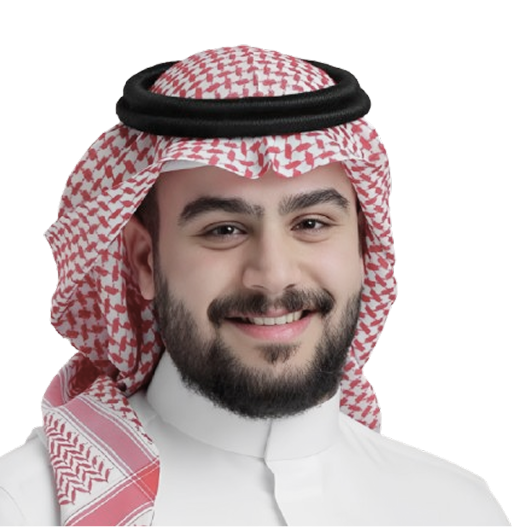
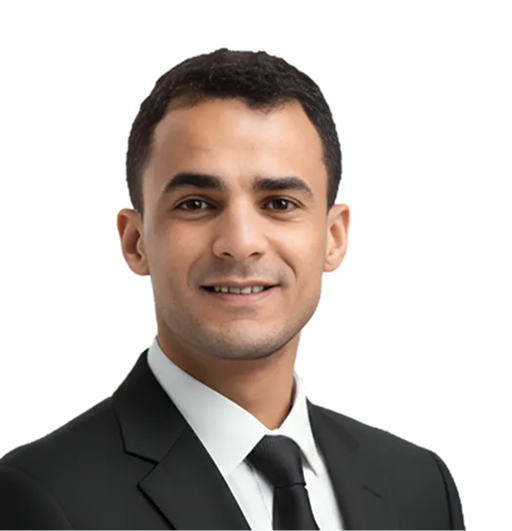
Aakam is small on purpose. The people who decide what deserves a product are the same people who build it and run it afterwards.

  • Nawaf Alddarab, Co-Founder of Aakam

    Nawaf Alddarab

    Co-Founder
  • Ali Aldihnayn, Co-Founder of Aakam

    Ali Aldihnayn

    Co-Founder
  • Mahmoud Omar, Co-Founder of Aakam

    Mahmoud Omar

    Co-Founder

Talk toAakam